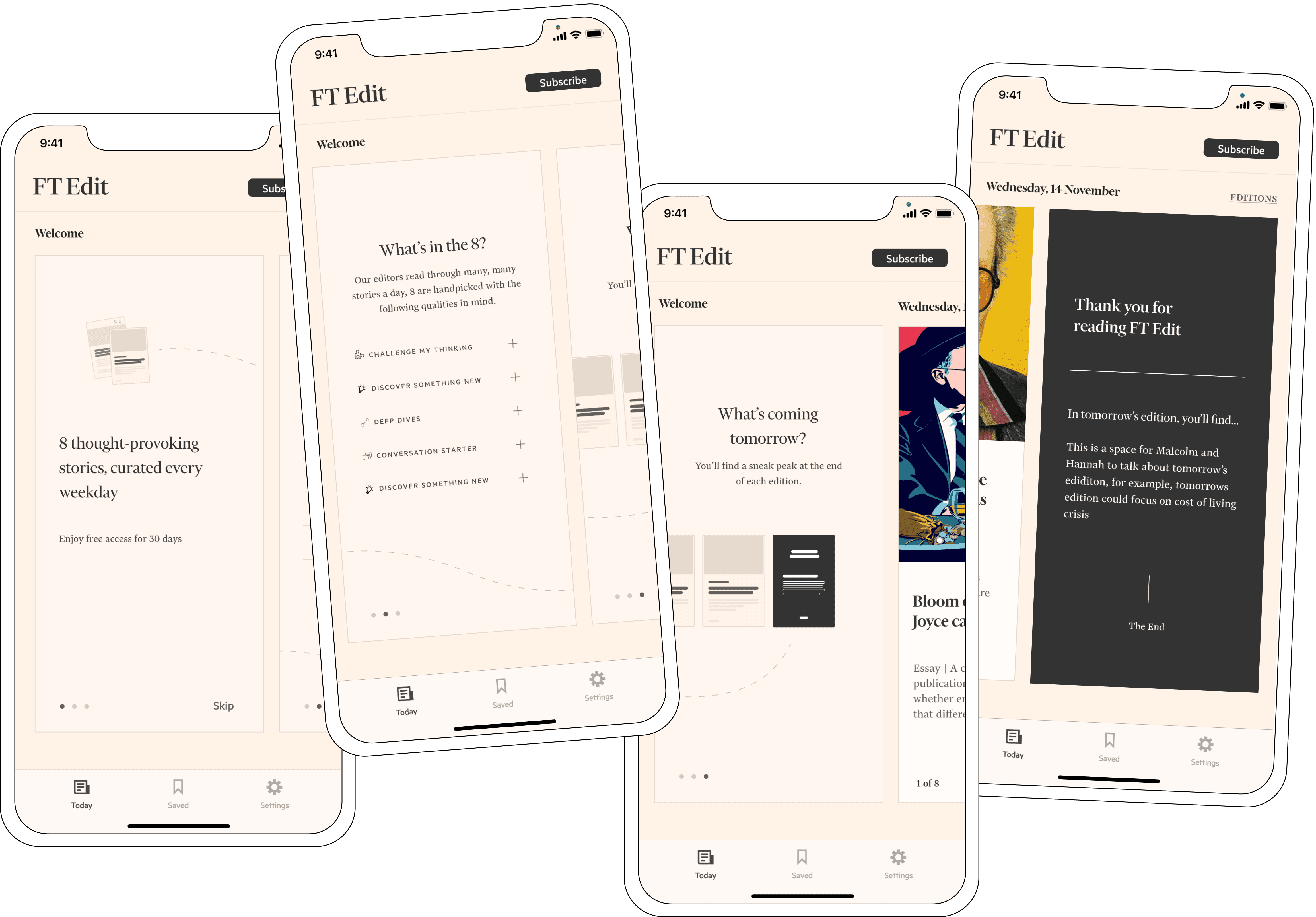
Creating lasting reading habits post-launch at Financial Times' FT Edit

impact
Day-1 retention increased by 48%
Carousel engagement increased by 5%
Article CTR increased by 7%
Ajai Freeman-Lampard
PRODUCT DESIGNER

Role

Product Designer

Team

PM, Technical Lead, User Researcher

Focus

Retention & habit formation

Outcome

Following my departure the team shipped iterations of the work in February. An A/B test demonstrated clear impact within the first week

Ajai Freeman-Lampard
PRODUCT DESIGNER

Creating lasting reading habits post-launch at Financial Times' FT Edit

Creating lasting reading habits post-launch at Financial Times' FT Edit

impact

Day-1 retention increased by 48%

Day-1 retention increased by 48%

Carousel engagement increased by 5%

Carousel engagement increased by 5%

Article CTR increased by 7%

Article CTR increased by 7%

In late 2022, I led the post-launch redesign of FT Edit’s onboarding to address early drop-off and improve first-session engagement in a curated reading product.

In late 2022, I led the post-launch redesign of FT Edit’s onboarding to address early drop-off and improve first-session engagement in a curated reading product.
The Problem

Despite strong editorial content, early engagement was poor:

  • ~50% of users opened the app only once

  • 53% never reached an article during their first session

  • 56% didn't scroll to view all 8 articles

The core issue wasn’t content, it was how value was communicated during first use.
discovery & alignment
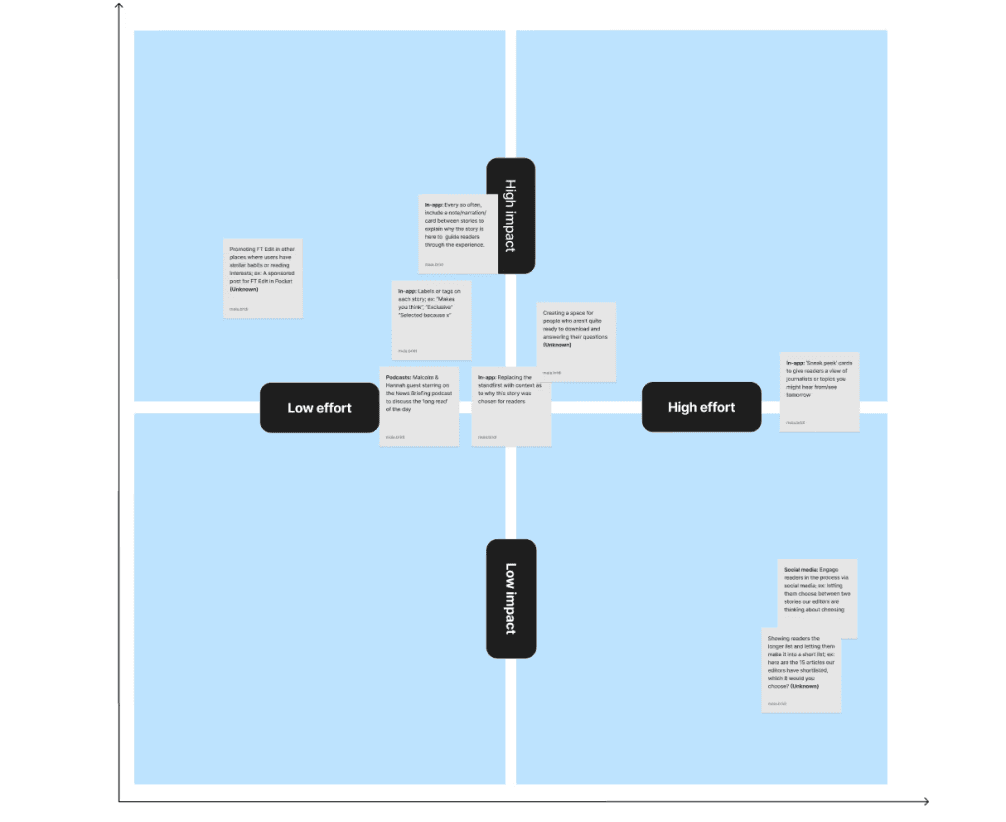
Working with research, I synthesised behavioural and qualitative insights to identify the highest-leverage opportunity. Clarity over curation.

To align product, editorial and engineering:

  • I framed solutions by effort vs impact

  • Narrowed the problem to communication not content volume

  • Integrated feasibility early to avoid over-designed solutions

This allowed us to focus on changes that could be tested and shipped.
design direction
I explored multiple concepts across onboarding and homepage points, this intentionally reduced the solution space to a set of testable changes

Key ideas & decisions:

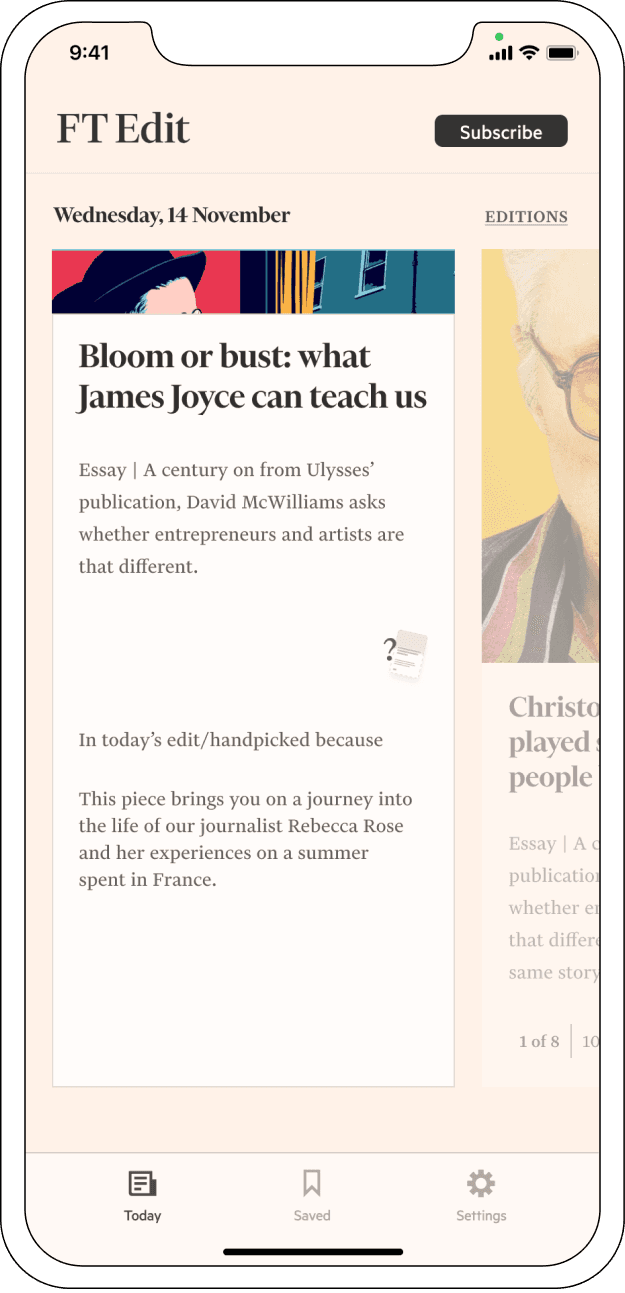
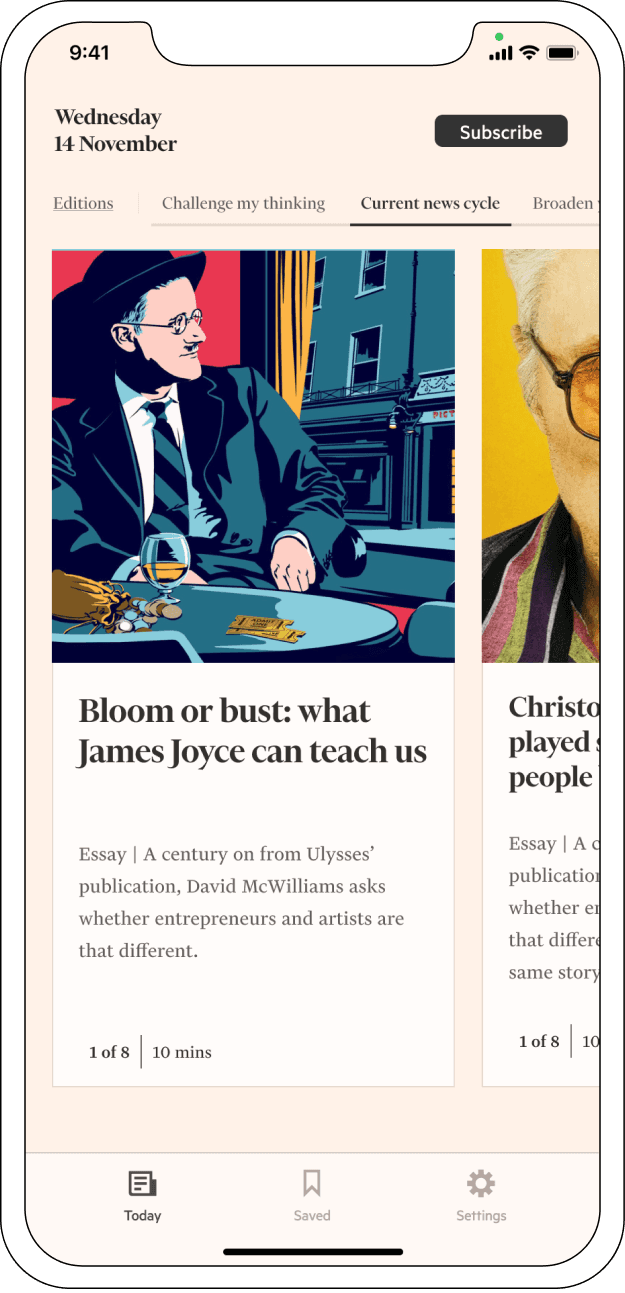
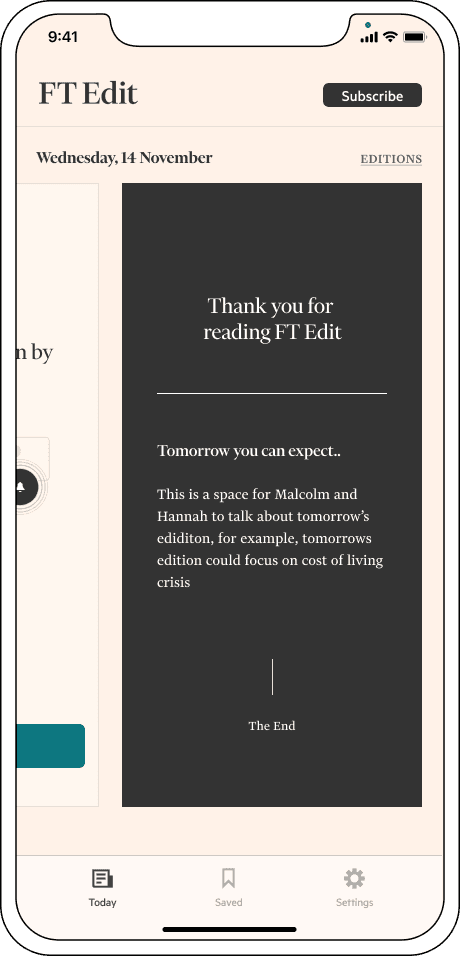
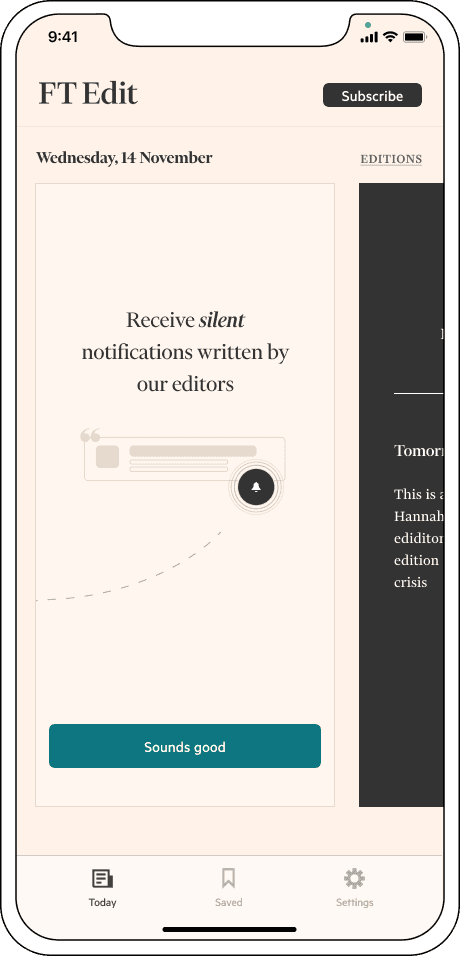
  • Embedding onboarding within the carousel rather than gating access

  • Separated instructional cues from editorial content

  • Introduced lightweight signals to set expectations

  • Evolved existing components to minimise engineering risk

Rather than treating onboarding as a one-off walkthrough, I reframed it as a behavioural system that was embedded in the apps reading experience

This approach balanced two competing needs:

  • Helping new users quickly understand why the app exists

  • Avoiding friction that blocked users from reaching articles

a key decision

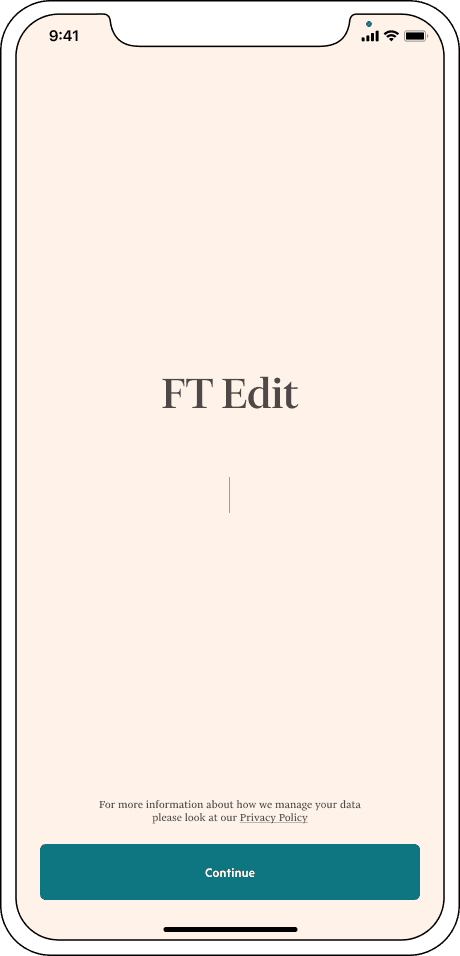
Internal stakeholders wanted to retain the value-proposition splash screen. However, behavioural data showed a 12% drop-off at this step.

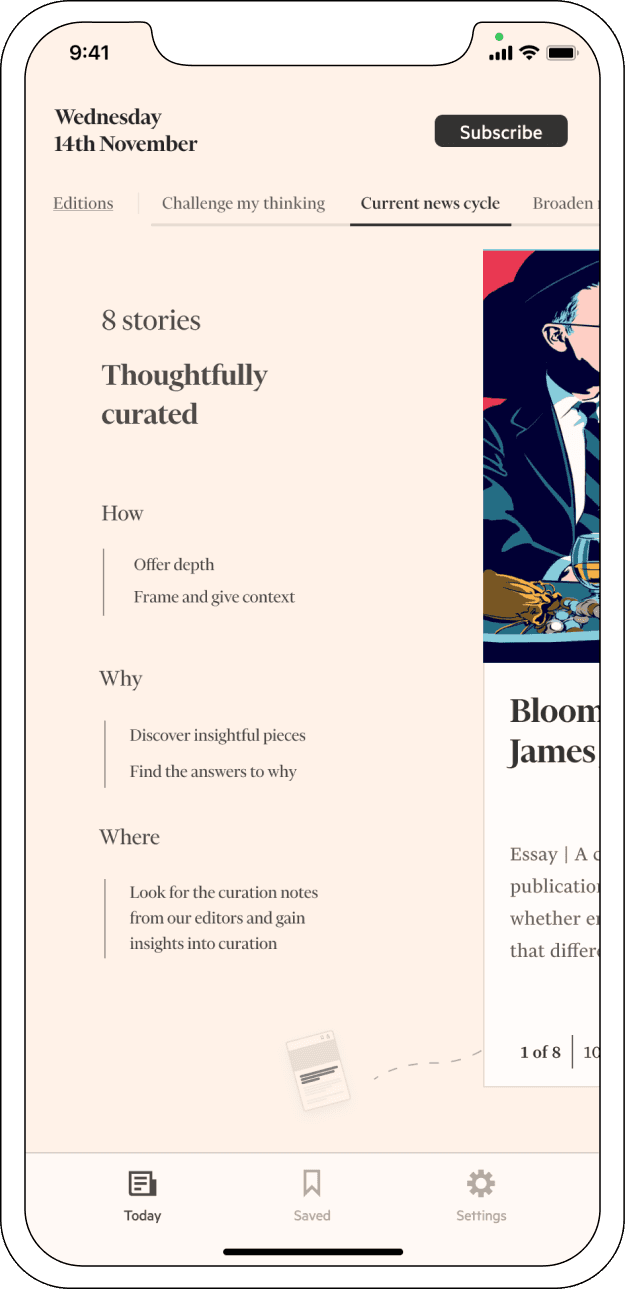
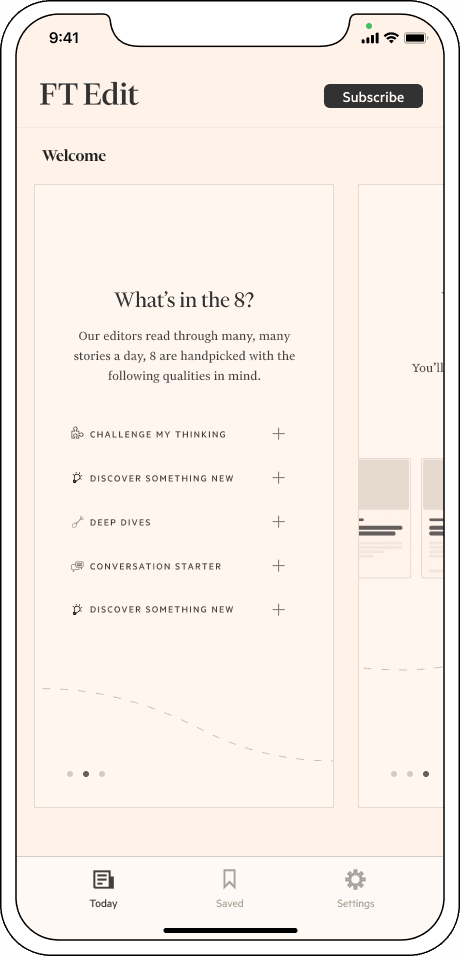
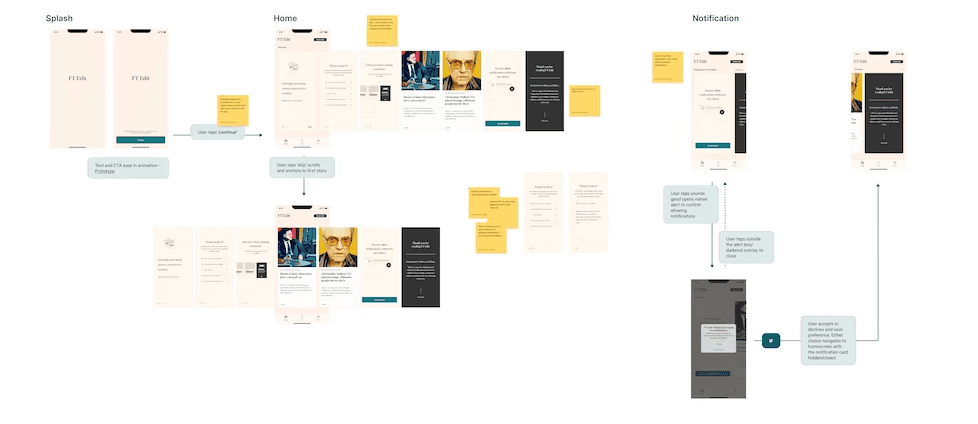
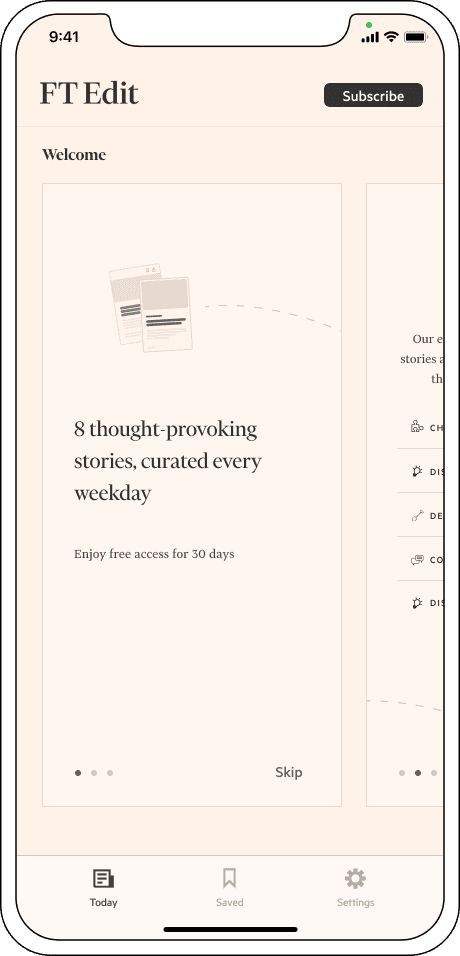
Rather than removing the content entirely, I proposed embedding the value statements directly into onboarding. This preserved editorial intent, while reducing friction and enabling faster exploration.

Replaced splash, as 12%of users drop-off, with embedded value cues inside the onboarding flow.

Replaced splash, as 12%of users drop-off, with embedded value cues inside the onboarding flow.
before
after
final design

With the structural changes agreed, I led a cross-functional review of the onboarding copy and content to ensure the experience felt intentional rather than repetitive.

We reduced duplicated messaging, tightened narrative flow and aligned editorial tone with behavioural intent. The result was an experience that clarified value without over explaining it
measuring success

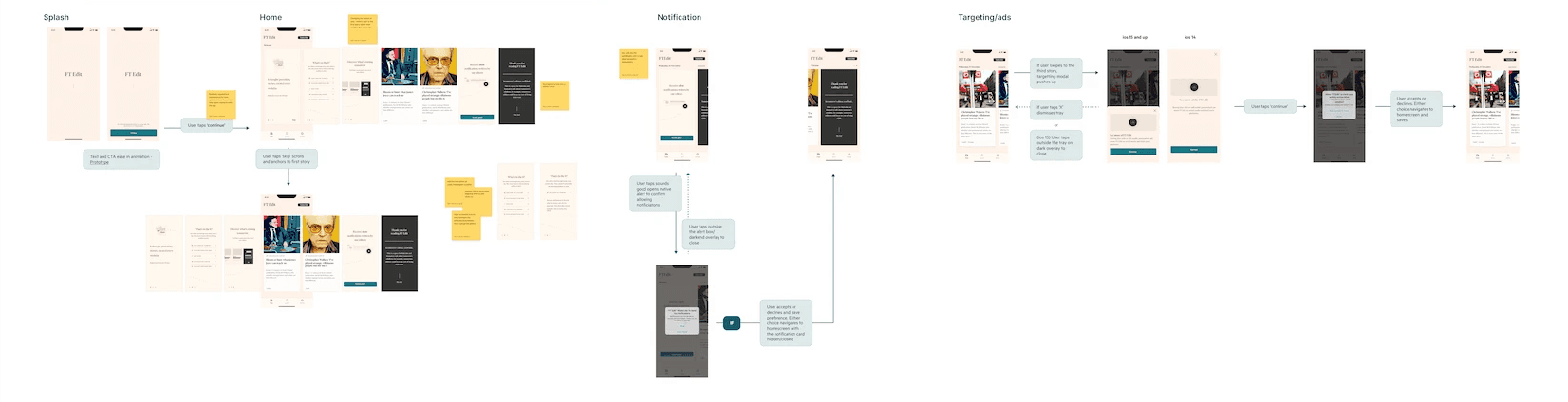
To support effecient decision-making, I mapped user-flow scenarios across key user types, aligning product, data and engineering on:

  • What success looked like

  • What could realistically be measured

  • What changes justified testing

Onboarding should be treated as a behavioural system, where editorial intent, user psychology and commercial metrics need to be aligned from the outset.

Onboarding should be treated as a behavioural system, where editorial intent, user psychology and commercial metrics need to be aligned from the outset.
What this project changed for me

This work reinforced the importance of:

  • Establishing shared risk tolerance early

  • Translating both business & user insights and requests into a clear design brief

  • Treating onboarding as a system, not a screen